


IMAGE
OTHER
 
St. Louis Public Library Bookmobile
Gerstenslager Company
International Harvester
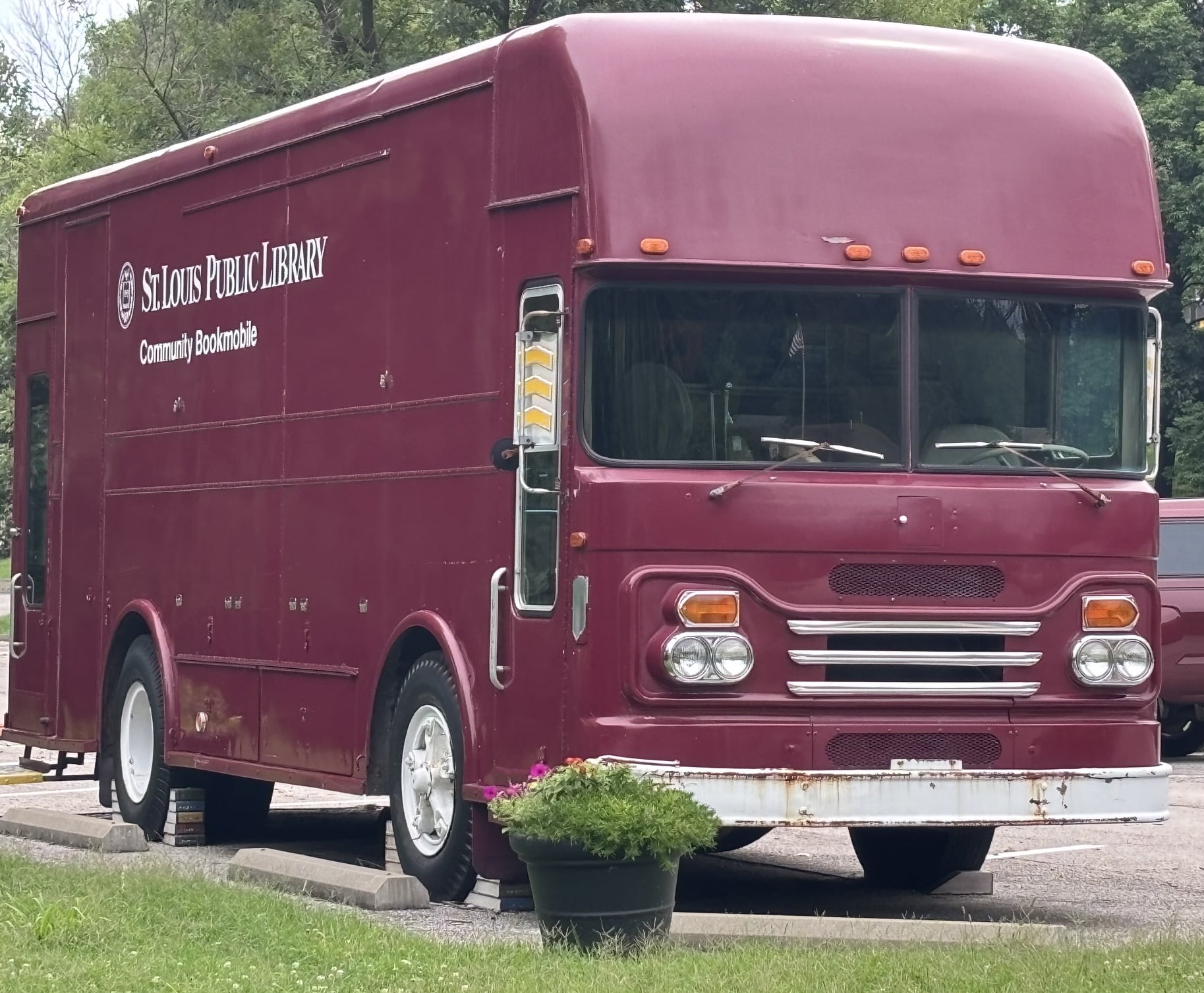
This bookmobile was custom-built by the Gerstenslager Company using an International Harvester chassis. Based in Wooster, Ohio, Gertsenslager was a coachbuilder known for making delivery vans and other commercial trucks. They manufactured postal trucks for the U.S. Postal Service, Weinermobiles for Oscar Meyer, and bookmobiles for libraries throughout the country. Their company’s influence with American libraries was so great that a member of the American Library Association sat on their board of directors during the late 1950s and 1960s. By 1964, the company controlled 90% of the bookmobile market. Sales of bookmobiles started to decline in the early 1970s, and Gerstenslager made their last unit in 1986. St. Louis is primarily served by two library systems: St. Louis County Library, with locations in St. Louis County, and St. Louis Public Library, with locations in the city of St. Louis. This artifact belonged to the city-based St. Louis Public Library and was their last operating bookmobile. It was donated to our collection in 1991.
IMAGE
OTHER
 
Coral Court Motel
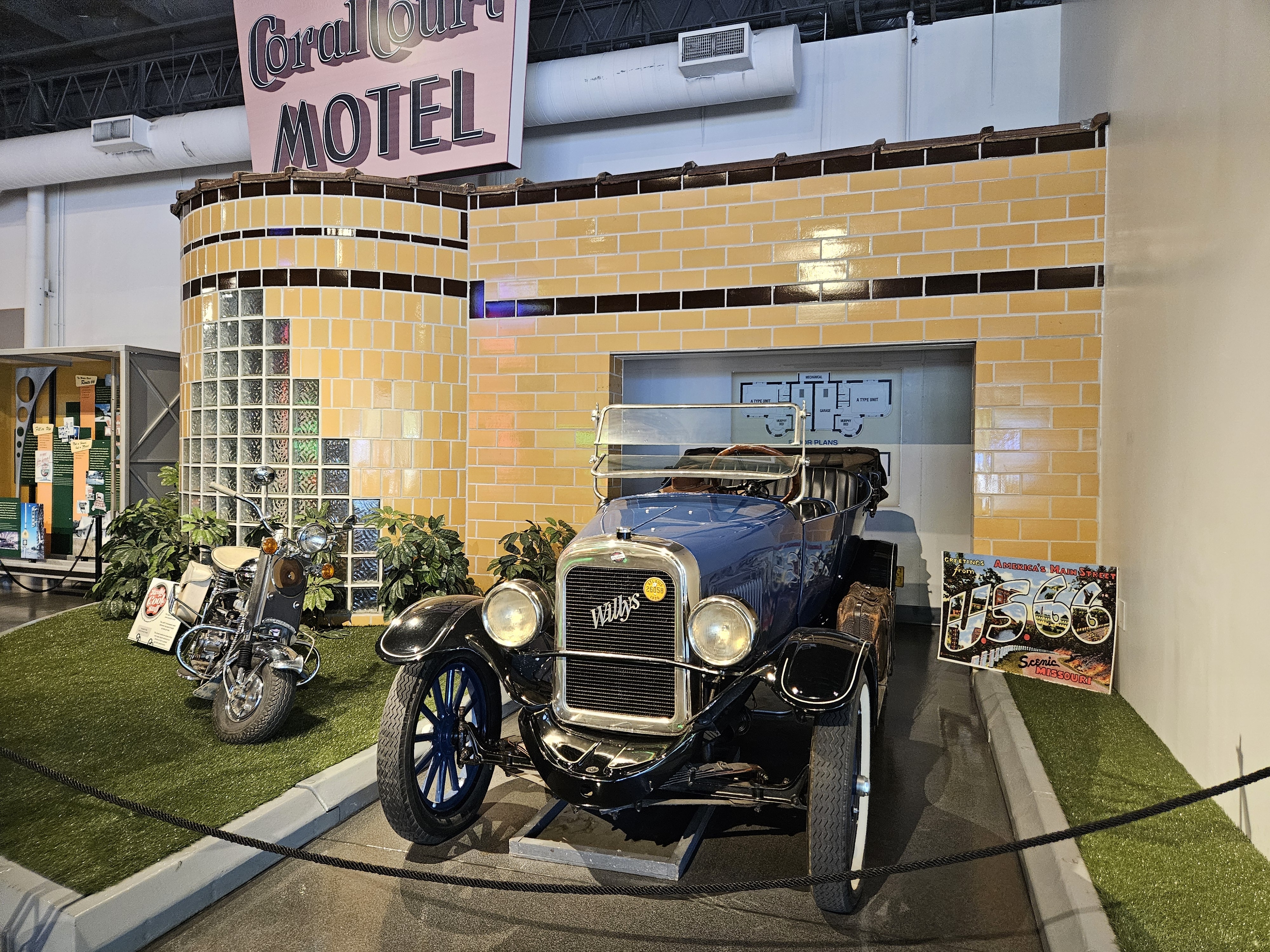
​In the Earl C. Lindburg Automobile Center is located a display unit of the ultra-modern Coral Court Motel.  This unit of the famous motel was saved from the wrecker's ball for our museum.  The motel was built in 1941 one mile west of the city limits on Route 66.  Coral Court epitomized speed, streamlining and the ideals of highway travel.  The architectural gem was set among tree-lined streets and featured a swimming pool.  Its end came in 1993 when it was condemned. Hear more here.
IMAGE
OTHER
1953 
Westward Hotel/Motel Neon Sign
Neon Sign
Bernard McMahon Architect
The Westward Hotel/Motel (it went by different names during its lifetime) stood at the northeast corner of Watson Road and South Kirkwood Road (or South Lindbergh, depending on the source one consults). La Quinta Inn and Denny’s are there now. When the Westward was about to be torn down in the late 1990s, the sign was given to the Museum and displayed. It was taken down for a Museum renovation, and its height didn’t work in the new setup. The sign has since been divided into three parts and recently returned to the Earl C. Lindburg Automobile Building. The Westward stood at the intersection of Bypass Route 66 (Kirkwood/Lindbergh) and City Route 66 (Watson). It was designed by prominent St. Louis architect Bernard McMahon and opened in 1953. According to “Help Wanted” ads of days past, it had 22 rooms. As the sign at the Museum highlights, those rooms had air conditioning and TVs (at least at some point).
IMAGE
OTHER
1943 
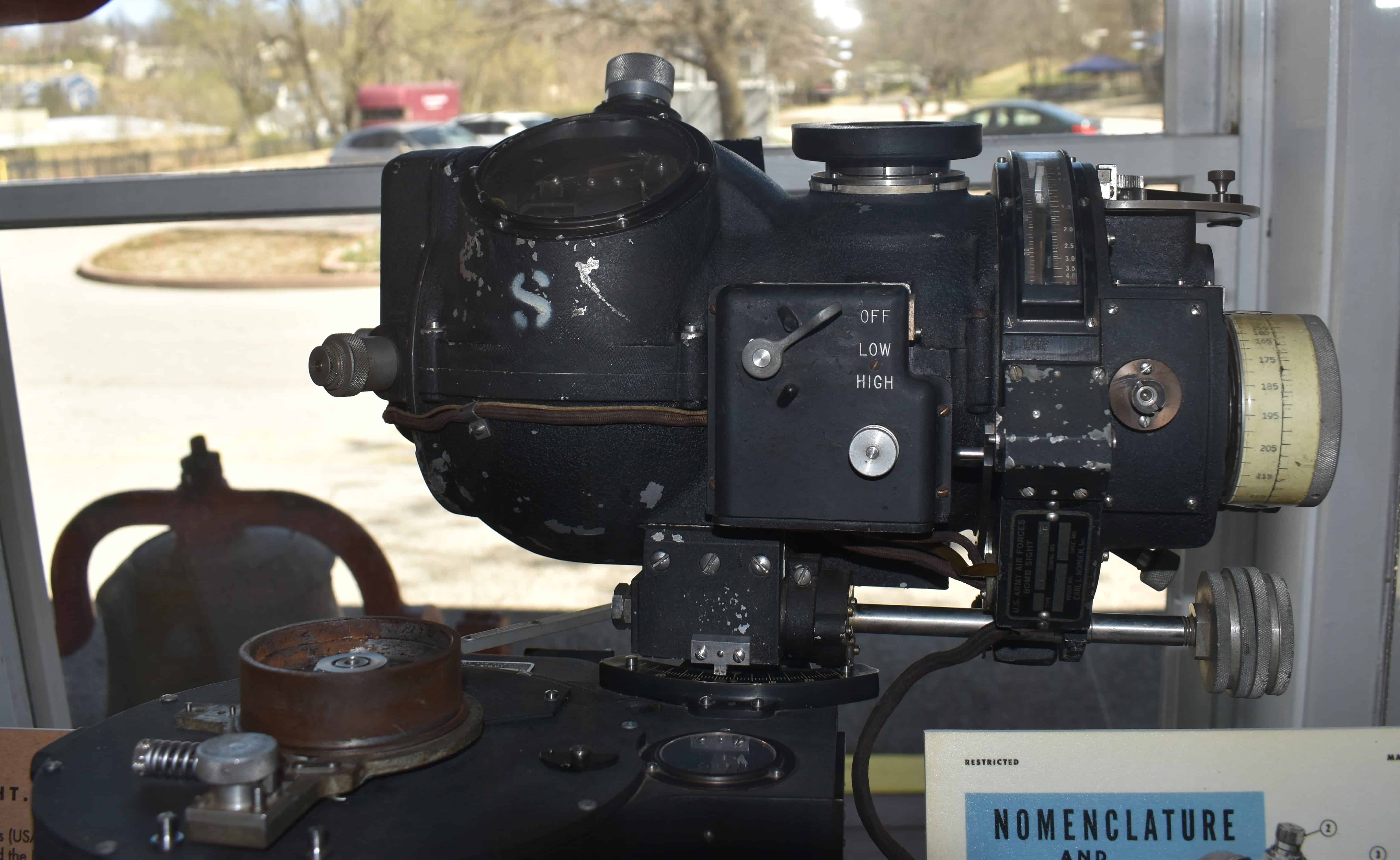
Norden Bombsight
Norden
U.S. Army Air Forces
Designed by Carl Norden, this 1943 Norden Bombsight was a highly advanced aiming device used by the U.S. Army Air Forces during World War II. It played a critical role in Allied bombing campaigns, particularly against targets in Germany and occupied Europe.
IMAGE
OTHER
1995 
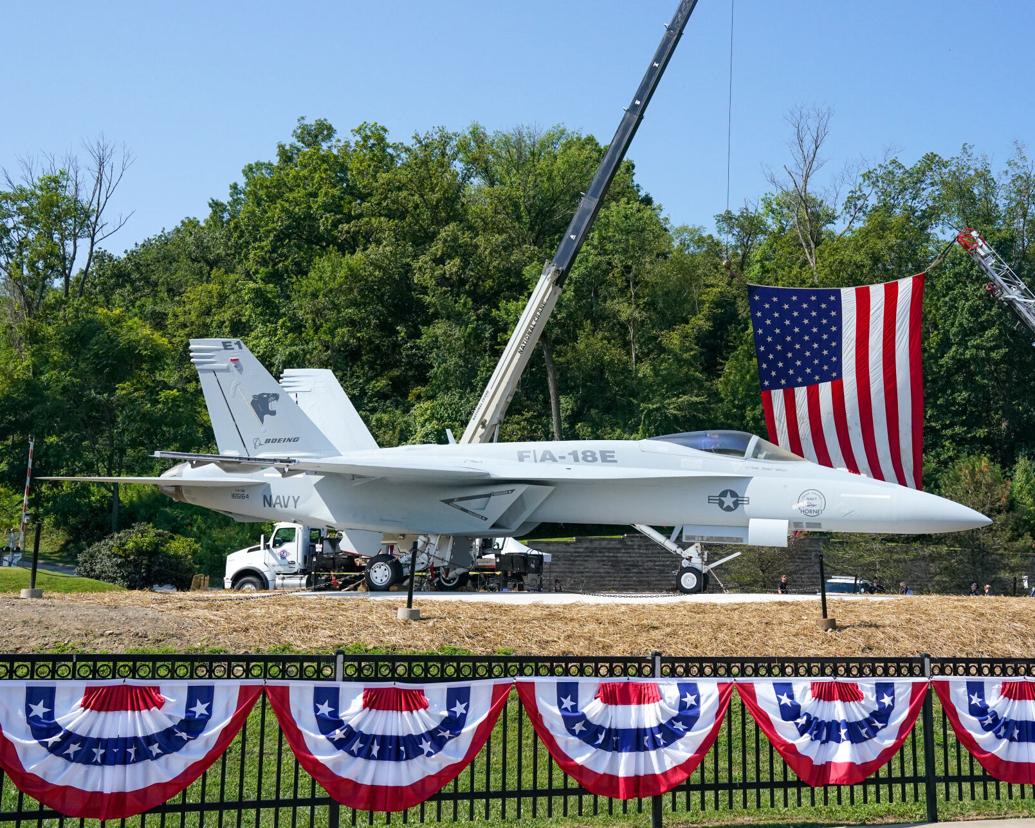
F/A-18 E1 Super Hornet U.S. Navy
Boeing/McDonnell Douglas
Super Hornet
The F/A-18 E1, the first Super Hornet ever produced, is a U.S. Navy carrier-based, supersonic fighter jet, built by Boeing right here in St. Louis, Missouri. BuNo. 165164 flew from Lambert Field on November 29, 1995. The E1 was later brought back to St. Louis to use in training as part of a program for aircraft being sold to Kuwait. The F/A-18 E1 arrived at The National Museum of Transportation in December 2023 unassembled, ON LOAN courtesy of the National Naval Aviation Museum on behalf of the Navy History and Heritage Command. Reassembly and installation were completed in July 2024, with a dedication ceremony held on August 3, 2024.
IMAGE
OTHER
1957 
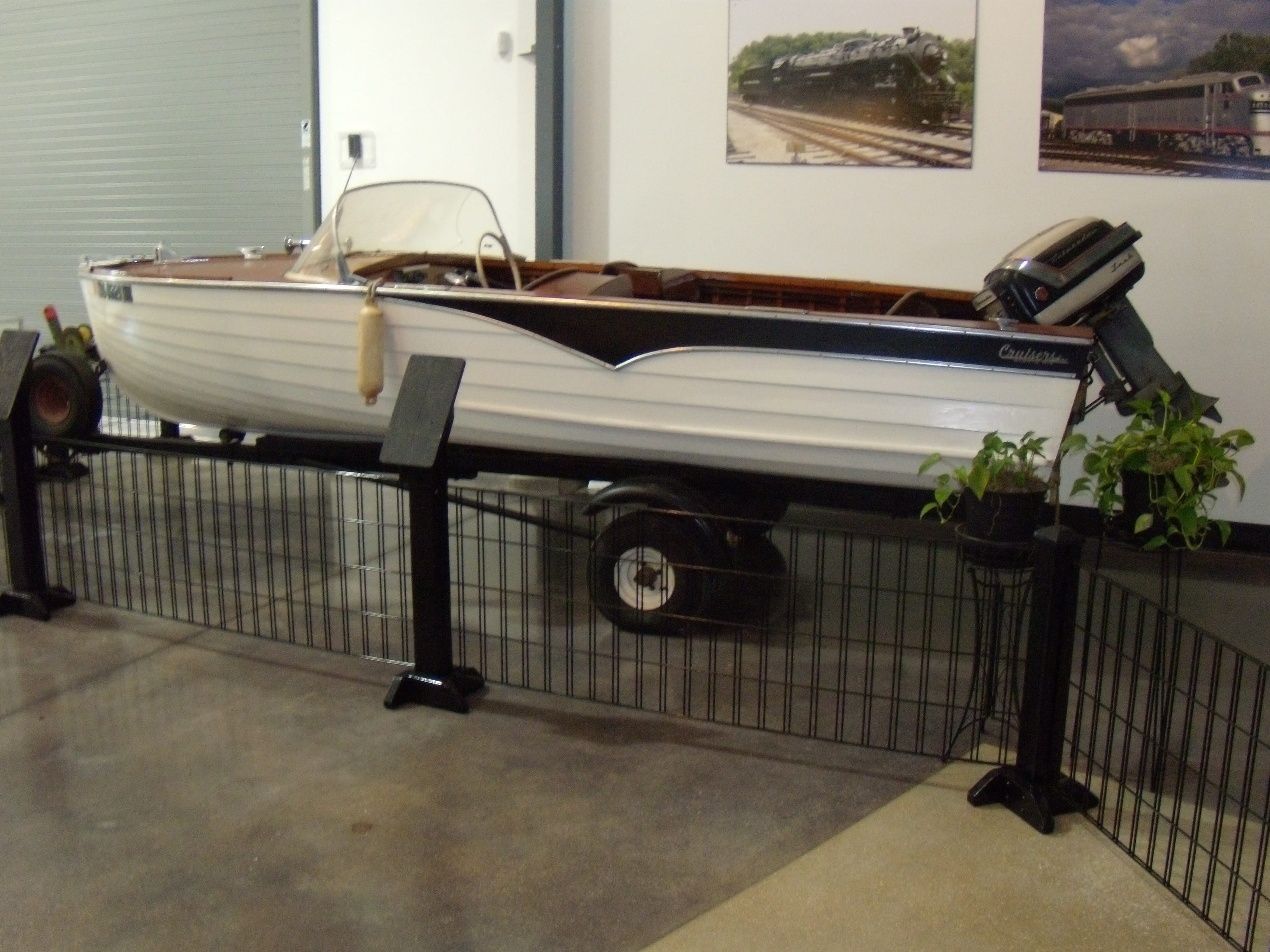
Cruisers Ski Boat
Cruisers, Inc.
This 1957 Cruisers ski boat gives a nod to a century of water skiing, a sport begun in 1922. Cruisers, Inc. started manufacturing wooden boats in 1953 in Oconto, Wisconsin.
IMAGE
OTHER
1917 
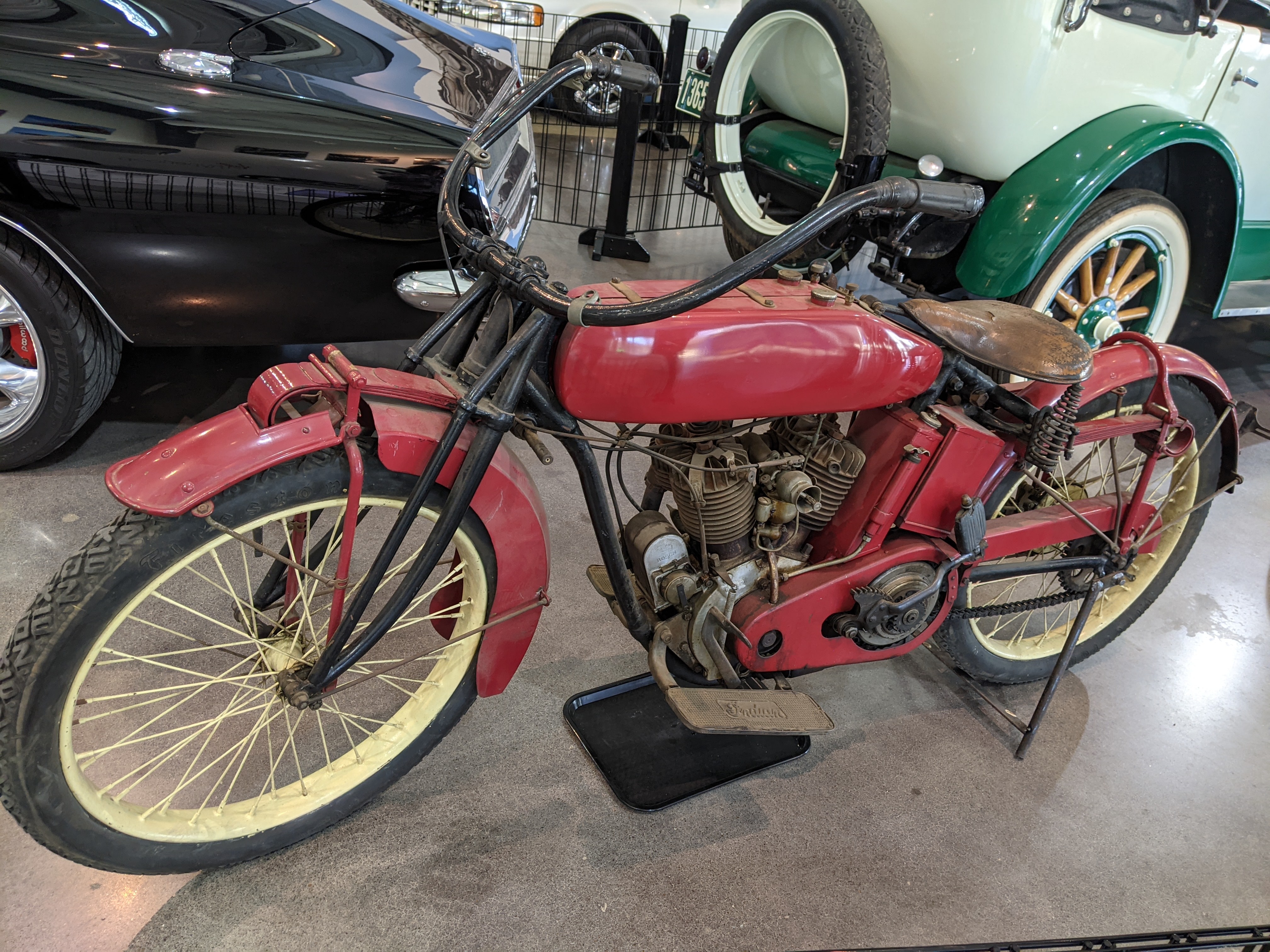
Indian Motorcycle PowerPlus
Hendee Manufacturing Company
Indian Motorcycle
This 1917 Indian Motorcycle PowerPlus was gifted to the Museum in 2023 by donors in Utah whose father rode the motorcycle when riding with actor Steve McQueen. An Indian motorcycle prototype was built in 1901, and Indian cycles were the industry leader until World War I, when the Hendee Manufacturing Company, which produced Indian motorcycles, sold most of its PowerPlus line to the U.S. military.
IMAGE
OTHER
2020 
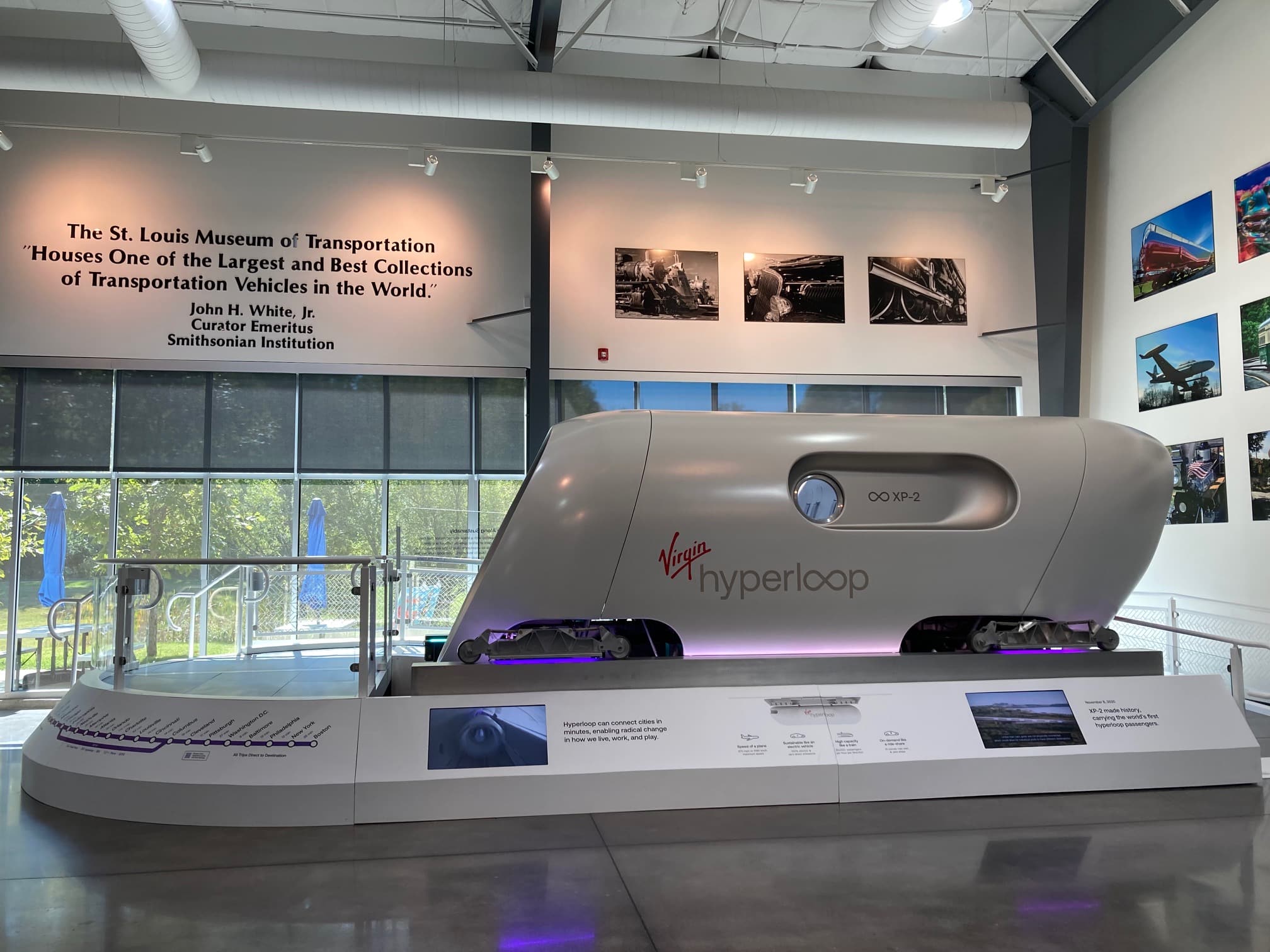
Virgin Hyperloop XP-2 Pegasus Pod
Virgin designed by Bjarke Ingels Group and Kilo Design
Hyperloop XP-2 Pegasus Pod
Tomorrow’s transportation has arrived at The National Museum of Transportation (TNMOT).  Direct from the Smithsonian Institution’s Futures Exhibit, The Virgin Hyperloop XP-2 Pegasus Pod, designed by Bjarke Ingels Group and Kilo Design, is at TNMOT. Come marvel at Virgin Hyperloop’s Pegasus pod. With speeds of up to 670 miles per hour, Hyperloop could be the first potential leap forward in mobility in a century. In late 2020 Virgin Hyperloop made it one step closer to reality, and made global headlines, when its first passengers completed a successful trial run of a technology that has long been a staple of science fiction. Distances that once took months to travel, and now take hours, will require just minutes.
IMAGE
OTHER
1870s - 1880s 
Penny-farthing Bicycle
Bicycle
The penny-farthing was the first machine to be called a "bicycle." The name came from the British penny and farthing coins, the former being much larger than the latter, so that the side view resembles a larger penny leading a smaller farthing. Popular in the 1870s and 1880s, it was also called a high wheel or ordinary. The front wheel provided higher speeds since it traveled a large distance for every rotation of the legs and more comfort with greater shock absorption. It became obsolete from the late 1880s with the development of modern bicycles, a/k/a "safety bicycles," which provided similar speed amplification via chain-driven gear trains and comfort through pneumatic tires. 
IMAGE
OTHER
Late 1800s-early 1900s 
Tower Grove Road Grader
Western Wheeled Scraper Company
Road Grader
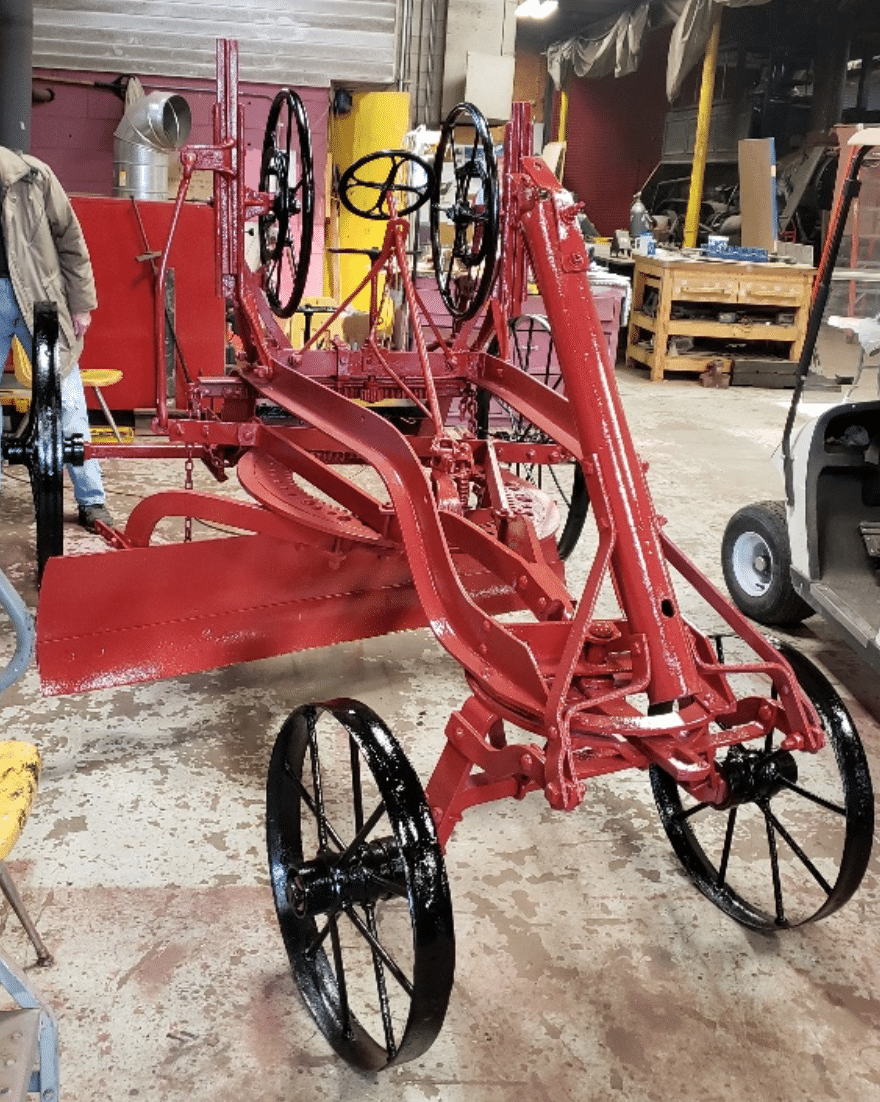
Grader was used in and donated by Tower Grove Park, which is a municipal park in the city of St. Louis, Missouri. Most of Tower Grove Park land was donated to the city by Henry Shaw in 1868. It is on 289 acres adjacent to the Missouri Botanical Garden, another of Shaw's legacies. It extends 1.6 miles from west to east, between Kingshighway Boulevard and Grand Boulevard. It is bordered on the north by Magnolia Avenue and on the south by Arsenal Street. Donated October 4, 2018, to TNMOT Western Wheeled Scraper