Ford
MAKE
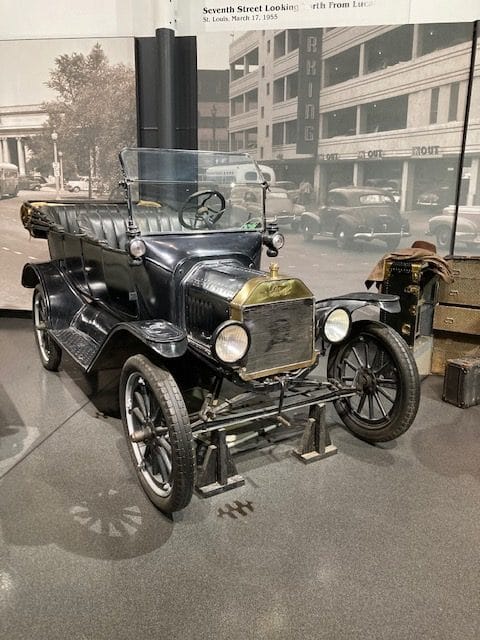
Model T Touring Car
MODEL
Introduced in 1908, the Model T offered simplicity, reliability, and respectable performance in an affordable package. When Henry Ford added the moving assembly line to Model T production, the result was a car that not only became cheaper to buy every year but one that dominated world-wide automobile production for almost two decades. By 1922, over one million "Flivvers" were being sold annually. Its aging design led to the replacement of the Model T with the Model A for the 1928 model year. The Model T had a front mounted 177 cubic inch inline four-cylinder engine producing 20 hp for a top speed of 40-45 mph. The cost of a 1915 Model T was approximately $390 dollars.
Henry Ford’s approach to the Model T design was one of getting it right and never changing. He believed the Model T was all the car a person would ever need. However, there were design changes. For example, in 1915 the hood design retained the five-sided design but louvers were added to the vertical sides, and electric headlights replaced carbide headlights.
Specifications: 4-cylinder engine; 176.7 cubic inch displacement; 20 horsepower; 100 inch wheelbase; built in Highland Park MI; donated in 1969 by Preston Estep.
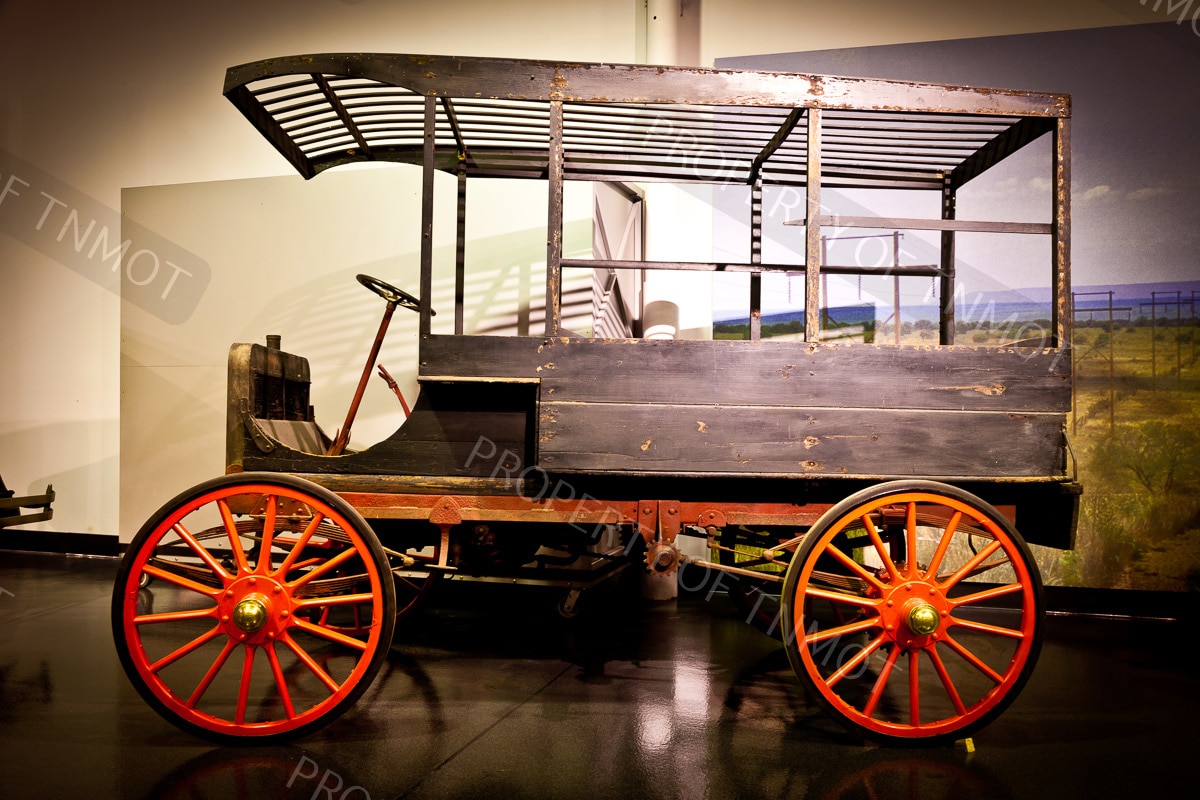
Galloway
MAKE
Truck
MODEL
The William Galloway Company of Waterloo, Iowa, had been a farm implement dealership and mail-order supplier of small farming equipment and tools before it introduced its line of trucks in 1908. The Galloway GT was marketed as a dual-purpose vehicle, "drive to church on Sunday and be put back to work on Monday." This unrestored truck features a two-cylinder, chain-driven, water-cooled engine. Research reveals it to be the oldest surviving delivery truck used in the city of St. Louis and one of fewer than ten Galloways to survive.
Engine Type: 2 cylinder
Horsepower: 14
Displacement: 142 Cubic inches
Price New: $570.00
Donated to the Museum in 1972 by William Abbott.
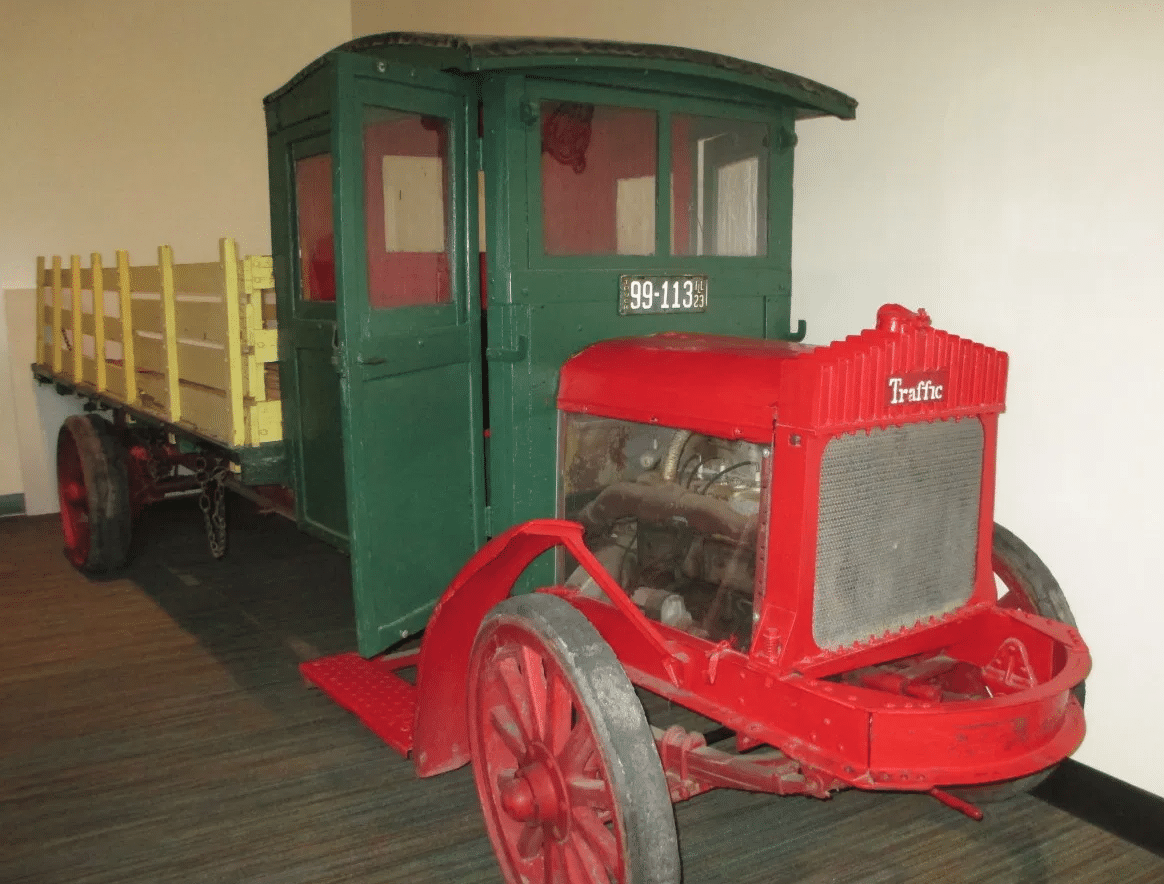
Traffic Motor Truck Corporation
MAKE
Traffic Truck
MODEL
Built in 1923 in St. Louis by the Traffic Motor Truck Corporation, which lasted from 1918 to 1929. Their trucks were the lowest price for their impressive 4000-pound capacity. 22.5 horsepower gave it a top speed of 12 miles per hour. It features solid wheels and an early version of power steering.
Four-cylinder Continental engine; 133 inch wheelbase; price new $1,495. Originally owned by Conklin Reuling Lumber, this truck was donated to the Museum by H. A. Reuling's grandson, Tim G. Soldwedel in 1982.
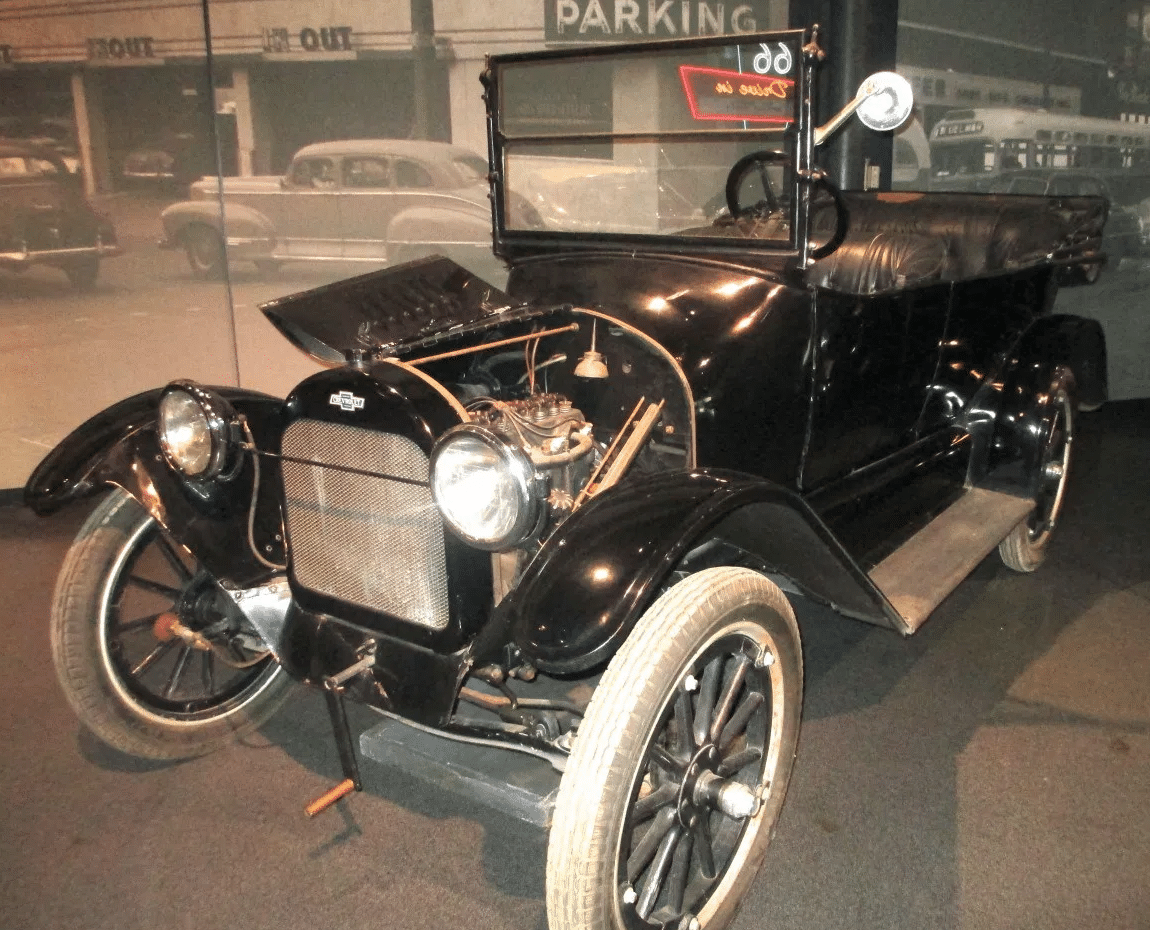
Chevrolet
MAKE
MODEL
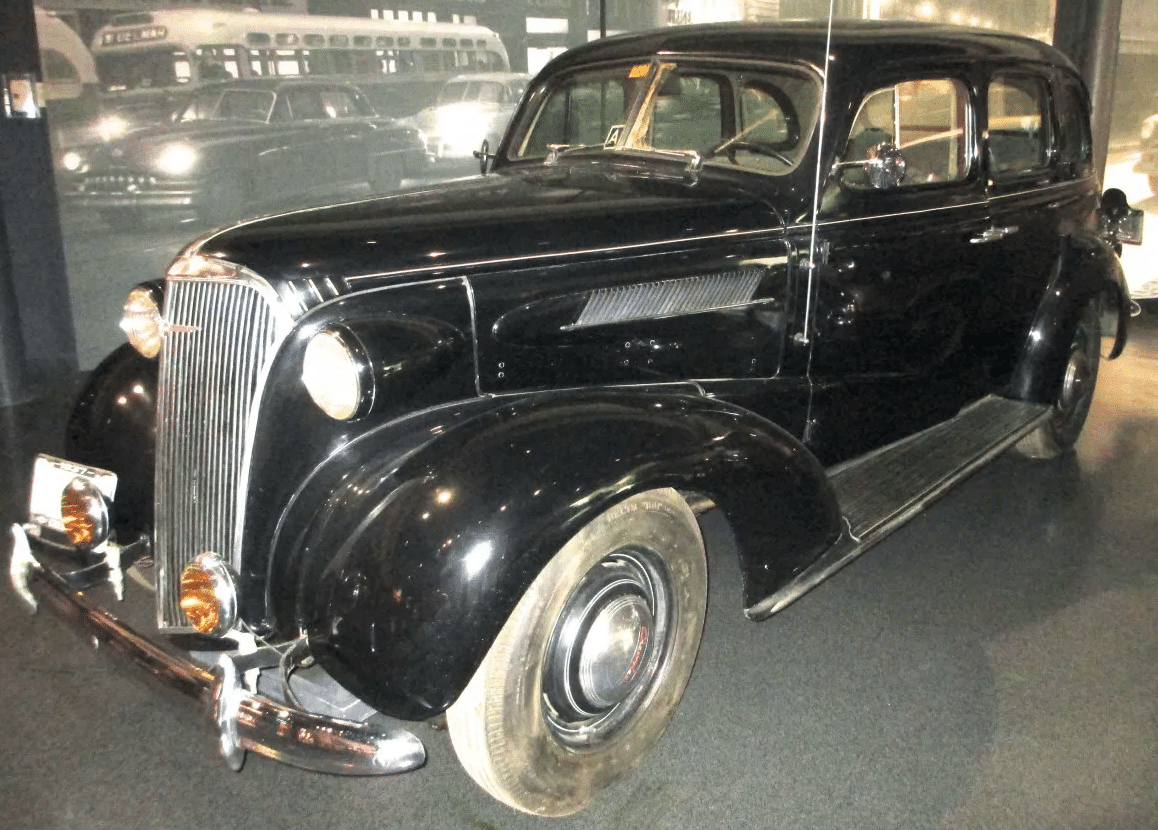
Wooden frame Chevrolet built in 1917.
Chrysler
MAKE
New Yorker Wagon
MODEL
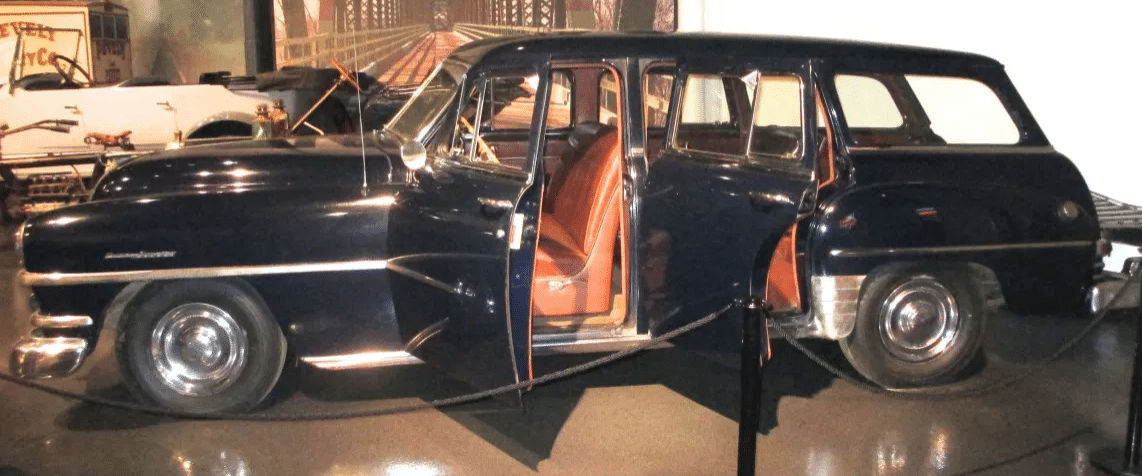
The Chrysler New Yorker 4 door station wagon was introduced in January 1951. Chrysler produced only a total of 251 units of this model.
The New Yorker was powered by a 331 cubic inch (5.4 liter) 180 hp Hemi V-8 engine called the “Firepower” engine. It was also equipped with power steering which was an industry first. The New Yorker also had fold down rear seats to provide more cargo space.
Statistically, the New Yorker was 213.25 inches in length, 75.125 inches in width, and had a 131.5-inch wheelbase. Its top speed was approximately 98 mph, and fuel consumption was 10.9 mpg; built in Detroit MI.
The original manufacturer’s suggested retail price for the New Yorker Wagon was $4026.00.
Donated by Celia Scudder in 1980.
Ford
MAKE
Mustang
MODEL
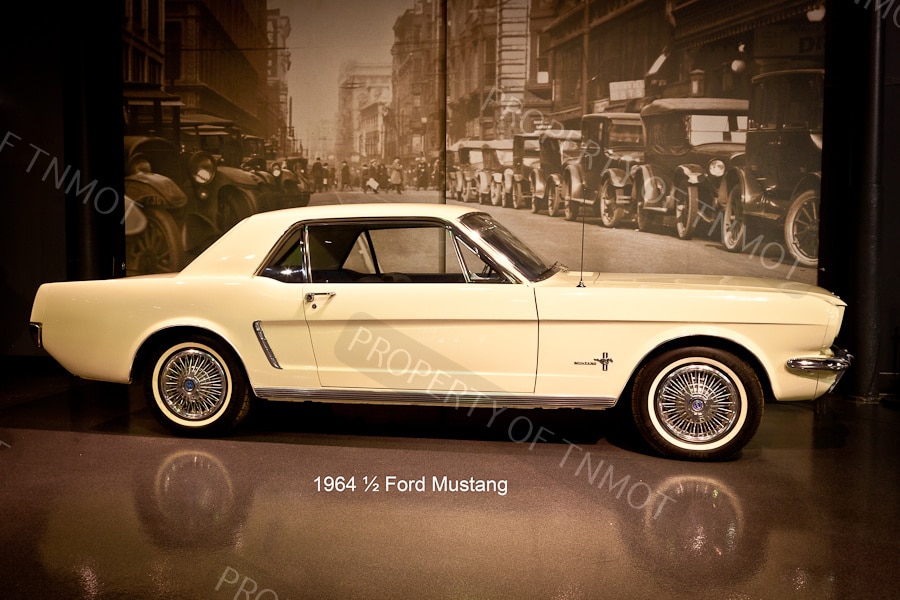
In 1961, Ford General Manager Lee Iacocca aimed to sell a sports car with four seats, low weight, and a price tag under $2,500. In 1964, Iacocca's vision became a success with the introduction of the Ford Mustang. After selling more than 22,000 Mustangs on the first official sale date, Ford proved that it could manufacture an affordable sports car that the average American family could enjoy. It sports a 200 cubic inch, inline 6 cylinder engine; 108 inch wheelbase. Built in Dearborn, MI; price new $2,372. Donated by Carol E. William in 2001. The new car was introduced to the public on April 17, 1964 at the New York World's Fair.
This 1964 1/2 Mustang holds a coveted spot in American muscle car history, as it was the first generation of Ford Mustangs to be produced. Mustangs remain a "classic" American car to this day.
Chevrolet
MAKE
Bel Air Convertible
MODEL
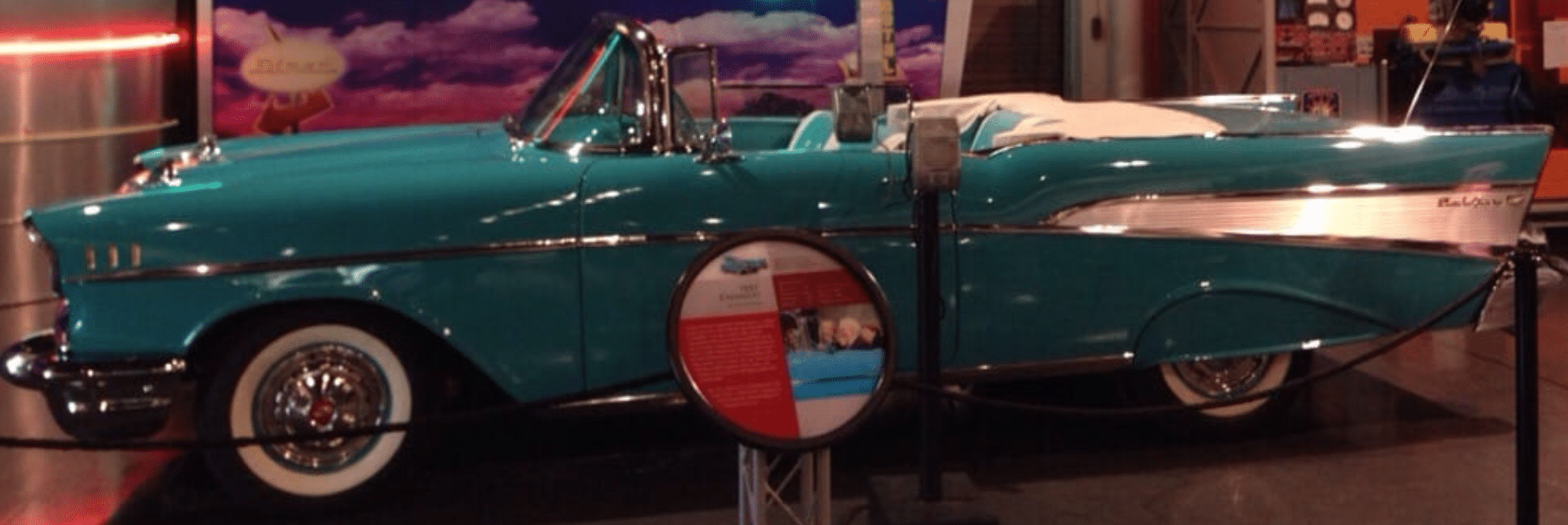
The 1957 Chevrolet Bel Air convertible model is the upscale model and is a popular, sought after classic car. The '57 Chevy, as it is often known, is an auto icon.
Motorcycle 4-cylinder
MAKE
Pierce Motorcycle Co. (Parent company was Pierce-Arrow Motor Car Co.)
MODEL
The Pierce 4 was the first 4-cylinder motorcycle produced in the United States. This 1912 motorcycle has a T-head, inline-4 with compression release 708cc engine with a two-speed transmission and could attain a speed of 60 mph. The frame of the Pierce has very large diameter partitioned integrated tubing for gasoline and oil.
Steam Car - Similar to an 8-cylinder internal combustion engine
MAKE
Stanley Motor Carriage Co.
MODEL
Stanley steam cars utilized an external combustion engine where the fuel source is consumed external to the engine. A steam boiler generates great quantities of power for later use, unlike an internal combustion engine that must develop the needed power on demand. Kerosene was used to light the pilot and main burner of the external engine as it provided more heat energy than gasoline. Kerosene was also less expensive and safer. It would take at least 20 minutes to start a Stanley Steamer. Fuel consumption was approximately one gallon of water per 10 to 12 miles.
Stanley Steamer was an alternate fuel vehicle in 1923. At the turn of the 19th century steam-powered automobiles were more prevalent than those with internal combustion engines. A steam boiler with a diameter 23" produced the steam that powered the vehicle. The boiler's nominal operating steam pressure is 600 pounds. They ran on any combustible material and water, produced large amounts of torque, were quiet and light, had few parts and did not require gears. Identical twin brothers Freelan and Francis Stanley used the money they made from developing the airbrush and selling their dry photographic plate process to Eastman Kodak to create the Stanley Motor Carriage Company. Over 11,000 Stanleys were built from 1900 to 1934 when the production was closed. The Stanley Steamer on display at TNMOT is a 740B touring car. It was built in Newton, MA and the price when new was $2,750. It was donated to the museum by Richard, Bob, and Bill Abbott.